
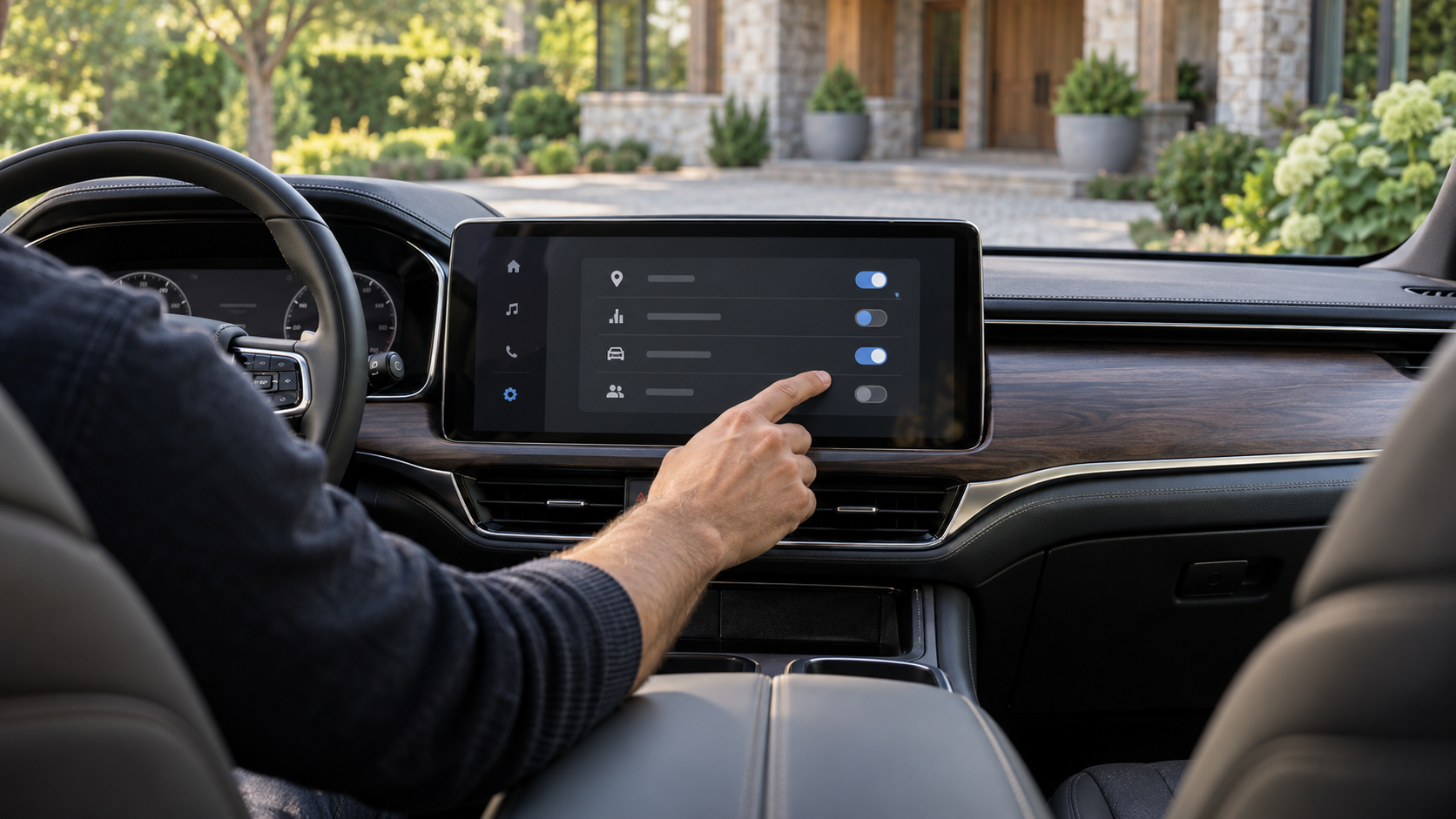
A car is the only asset a family buys that arrives with its own cellular connection already fitted and a consent already collected at the delivery desk. What the vehicles collect, where it goes, and the decisions an owner still controls.

Every control a family office builds runs through an agreement, and on a chartered vessel, in a rented villa or aboard an aircraft the office does not own, there is no agreement to write it into. What remains is selection and what the family carries with it. The questions to put to an operator before signing, and what to do about the people, the paperwork and the itinerary.

Most family offices are already using AI, so the decision is not whether to begin. Adopting a tool places family information in a system the office does not control, on terms it did not write, which makes it a counterparty decision rather than a technology one. What to inventory, who should approve, and what to require of the vendor.

A family office’s verification rules are built for payments and for strangers. The gap is the request that moves no money, made by someone the office knows, on a channel it uses every day. The control is a phrase agreed in advance, and the obstacle to using it is social rather than technical.